
ASO 스쿨
여기에서 ASO, 앱 마케팅, App Store 최적화 및 앱 홍보 전략에 대해 배우고 최신 앱 시장 뉴스 및 분석을 얻을 수 있습니다. App Store 최적화를 수행하고 앱 데이터 성장을 촉진하도록 지원합니다.
Apple Loses Antitrust Lawsuit in Germany: EU Regulatory Crackdown Escalates
2025-03-19
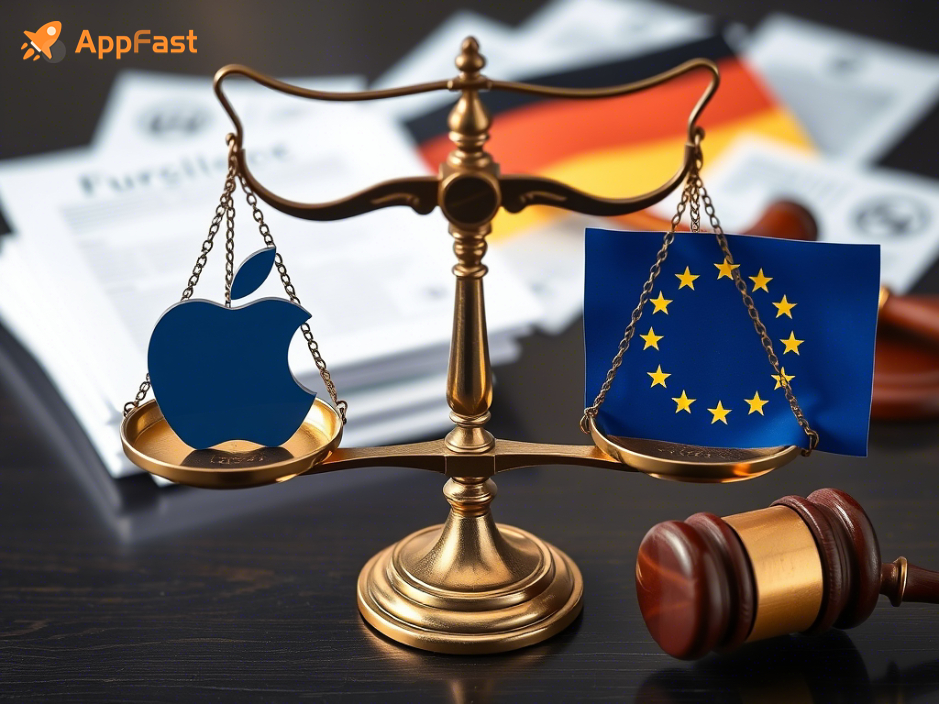
Apple Loses Antitrust Lawsuit in Germany: EU Regulatory Crackdown Escalates
Event Overview: Supreme Court Upholds Regulatory Ruling
On March 18, 2025, Germany’s Federal Supreme Court ruled against Apple in an antitrust appeal, maintaining the 2023 decision by the Bundeskartellamt (German Federal Cartel Office) to designate Apple as a "company of paramount cross-market significance". The ruling was based on Apple’s over 60% share in Germany’s smartphone market, its vertically integrated "ecosystem" model, and its control of massive user behavioral data (terabytes of data daily). The court emphasized that Apple, as one of the world’s most valuable companies, possesses resource advantages that could pose potential anti-competitive risks, even without evidence of actual market harm.
Apple had argued against the ruling by citing "intense market competition" and its "privacy-protective business model", and requested consultations with the European Court of Justice (ECJ), both of which were rejected. Andreas Mundt, President of the Bundeskartellamt, stated the decision "lays the legal foundation" for ongoing investigations into Apple’s App Tracking Framework and other cases.
Implications for Developers: From "Walled Garden" to Compliance-Driven Change
1. App Store Ecosystem Liberalization
German regulators targeted Apple’s long-controversial "payment hegemony": the 15%-30% App Store commission and mandatory use of Apple’s in-app purchase (IAP) system were deemed anti-competitive. While the EU’s Digital Market Act (DMA) already mandates Apple to open third-party app stores and sideloading, the German ruling could accelerate local compliance—e.g., allowing developers to bypass Apple Pay for direct user transactions, potentially costing Apple hundreds of millions in annual revenue.
2. Pressure for Data Transparency
The court explicitly criticized Apple’s "ecosystem barriers" in data collection, demanding stricter scrutiny of user behavioral data usage. Developers may gain greater data access, pushing app business models from "data-driven" to "service-driven".
3. Regional Regulatory Domino Effect
As a core EU market, Germany’s ruling could influence antitrust actions in France, Italy, and elsewhere. For example, Meta’s 2024 compromise on data privacy in Germany under investigation suggests Apple may face similar pressures.

Lessons for Developers: Embrace Regulation, Rebuild Competitiveness
1. Multi-Channel Distribution Strategies
With EU DMA and German rulings advancing, developers should explore third-party app stores (e.g., Epic Games Store, Skich) or direct channels to reduce platform dependence. Spotify’s web-based subscriptions to avoid Apple’s fees exemplify a model likely to expand.
2. Balancing Compliance Costs and Innovation
Regulation forces improved data governance—e.g., anonymization techniques for compliant data use. Developers can also innovate within regulatory gaps: Germany’s permitted "in-app price comparison tools" have boosted conversion rates for some SMEs.
3. Navigating Regional Regulatory Differences
EU antitrust logic differs from the U.S.: the EU prioritizes "preventive regulation" (e.g., Germany’s "potential risk" standard), while the U.S. requires "actual harm" evidence. Developers must tailor strategies: prioritize DMA compliance in Europe, and monitor post-Epic Games "anti-steering" rules in the U.S.
Conclusion
Apple’s defeat in Germany marks the EU’s deepening commitment to "preventive regulation" of tech giants. While short-term compliance costs may rise, stricter rules create fairer competition for developers. Moving forward, tech firms must balance "user experience" with "public interest", while developers should seize ecosystem restructuring opportunities to shift from "platform dependence" to "autonomous control."

ASO 전문가와의 무료 상담
ASO를 처음 이용하거나 앱의 목표 최적화를 수행하는 방법에 대해 잘 모르십니까?
저희는 앱 마케팅 전문가가 제공하는 일대일 맞춤형 서비스를 제공합니다
관련 권장 사항



Copyright © 2018 - 2021 AppFast Company, LLC. All Rights Reserved. The AppFast word mark is a
registered trademark of AppFast Company, LLC in the US and other countries.