
Школа ASO
Здесь вы можете узнать об ASO, маркетинге приложений, оптимизации магазинов приложений и стратегиях продвижения приложений, а также ознакомиться с последними новостями и анализом рынка приложений. Мы помогаем оптимизировать магазин приложений и способствуем росту данных о приложениях.
ASO Localization Guide: Multilingual Keywords and Cultural Adaptation to Seize Market Traffic
2026-01-16
Introduction: ASO Localization – The Core Key to Breaking the Traffic Impasse
Currently, homogenization in the app market is intensifying, and the traffic dividend from app stores has peaked. Many products are struggling due to a lack of localization: direct translation of keywords leads to inefficient traffic matching, cultural clashes trigger user resistance, and ultimately result in sluggish exposure and conversion rates.
The core value of localized ASO lies in a two-way breakthrough: On the one hand, it seizes search traffic entry points through precise keyword placement; on the other hand, it builds user trust by adapting to local cultures. A wealth of market practices and industry reports show that apps that invest in systematic localization optimization tend to experience a significant leap in organic traffic and download conversion rates. The improvement brought by this type of optimization is remarkably pronounced, making it a core leverage for helping apps stand out in app stores and break through growth bottlenecks.
This article focuses on two core areas: “multilingual keyword optimization” and “cross-cultural adaptation,” breaking down practical methods to help developers efficiently avoid common pitfalls and seize market traffic.
Basic Understanding: The Core Logic of ASO Localization
1. Definitions and Boundaries
Localizing ASO is by no means a simple language translation; it is a systematic undertaking that encompasses three major dimensions: language adaptation, cultural alignment, and market compliance. Its core objective is to make the app feel “native” in the target market—aligning with local users’ search habits, resonating with their cultural perceptions and usage scenarios, and ultimately ensuring that the app is “precisely discoverable through search” and “willingly downloaded.”
2. Key Points for Differentiated ASO Operations in Different Markets
User behavior in mainstream markets differs significantly from platform rules, necessitating the development of targeted strategies:
-
European and American Markets: When implementing keyword strategies, focus on the strong correlation between features and search terms, prioritizing high-commercial-value, precise keywords. In terms of compliance, data protection measures must be clearly indicated in the metadata to align with local regulations such as GDPR. The copywriting style should remain professional and concise, avoiding redundant embellishments.
-
Southeast Asian market: Keyword selection tends to favor short phrases and scenario-based expressions, with a need to strengthen the weighting of high-sensitivity terms such as “free” and “no ads.” Metadata can incorporate expressions related to social interaction to align with local user preferences. It is also crucial to focus on identifying and strategically deploying low-priced traffic keywords.
-
Japan and South Korea market: Visual assets and copy should lean toward emotionally resonant and meticulously crafted expressions; Reviews management takes priority over other markets, and high-quality word-of-mouth should be leveraged to enhance conversion efficiency.
Module One: Multilingual Keyword Optimization — A Standardized Process for Precisely Seizing Traffic Entry Points
Multilingual Keyword Research: A Three-Step Approach to Uncover High-Value Terms in Target Markets
Keyword research is the foundation of localized ASO. The core task is to identify the “real search terms” used by users in the target market, rather than simply translating Chinese keywords. The specific execution is divided into three steps:
Step 1: Use a combination of tools to filter the initial lexicon.
-
General level: Use the AppFast keyword tool to obtain basic vocabulary and build the initial keyword library framework.
-
English market: By integrating the Google Trends tool, we filter for keywords that have shown an upward trend in popularity over the past three months, enhancing the timeliness of our keyword database.
-
Russian market: Use Yandex Keyword Planner as a supplement to obtain keyword data that aligns with local users’ search habits.
-
Southeast Asian minor-language market: Refer to autocomplete search terms on local e-commerce platforms such as Shopee and Lazada to capture language habits and supplement scenario-based vocabulary.
Step 2: Refining the three-dimensional lexicon
-
Core keyword dimension: Focus on the product’s core features and industry-recognized terminology, validate the effectiveness of keywords using search volume data, and firmly exclude keywords that are literal translations but have low search volumes.
-
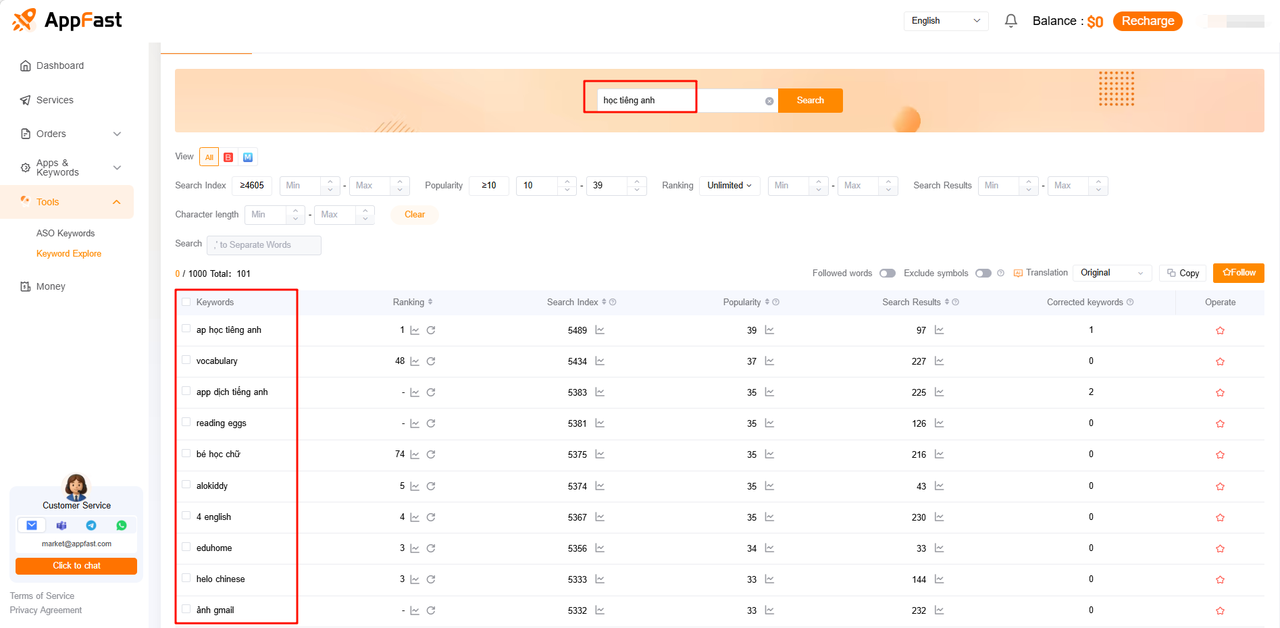
Long-tail keyword dimension: Leveraging the AppFast keyword expansion tool, we extend keywords based on user pain points in the target market and regional characteristics, with a priority on selecting long-tail keywords that have low competition and strong user conversion intent.
-
Competitor keyword dimension: Extract high-traffic keywords for top competitors in the target market; avoid red-ocean terms monopolized by competitors and uncover opportunities for differentiated keyword deployment.
Step 3: Language Difference Validation
-
Clearly define the validation targets: Conduct specialized validation to address differences in word usage for the same language across different regions.
-
Confirm the verification method: Directly search for relevant terms in the app store of the target market, and select the top-ranking expressions from the search results to ensure that the terms align with local users’ search habits.
To quickly build a high-value keyword library that aligns with your target market, you can consult AppFast’s business team directly.Get a customized app keyword library service tailored just for you, for free., No need to fumble around on your own—lock in local users’ real search terms in a single step.
Multilingual Keyword Translation and Optimization: Two Core Principles + Platform-Specific Layout Techniques
Keyword translation directly affects search relevance and user comprehension, and must adhere to two core principles:
Principle 1: Double Verification through Professional Translation + Native-Speaker Review
We reject raw machine translation and instead adopt a “professional translation draft + native-speaker review and calibration” model. Native-speaker reviewers must have ASO experience in the local market: they not only verify semantic accuracy but also assess the search popularity and user acceptance of each term, ensuring that the final vocabulary used is both accurate and search-friendly.
Principle Two: Prioritize matching search habits over grammatical correctness.
When filtering vocabulary, prioritize expressions that are frequently searched by users in the target market. Even if some terms are not grammatically optimal, search data should be the primary basis for selection.
Keyword layout must strictly adhere to app store rules to maximize weight utilization. Platform-specific execution highlights are as follows:
-
iOS App Store
-
Title character limit ≤30; core keywords must be placed at the beginning, paired with core selling-point terms.
-
The subtitle supplements synonymous expressions for the core keyword + 1–2 long-tail keywords, highlighting differentiated advantages.
-
The long description is clearly segmented, with each segment focusing on one core selling point and naturally incorporating the core keywords 3–5 times to avoid overstuffing.
-
The keyword field lists high-traffic long-tail keywords; repetition with the title or subtitle is strictly prohibited.
-
-
Google Play
-
Title character limit ≤50, accommodating core keywords + target audience + core selling points;
-
The first two sentences of the short description must include the core keywords and core value proposition to attract users to read.
-
The long-description logic must follow the “Pain Point–Solution–Benefit” structure, with a topic sentence at the beginning of each paragraph to naturally incorporate keywords.
-
No need to set up keyword fields separately; focus on optimizing the title and short description.
-
Improving Multilingual Keyword Rankings: Algorithm Adaptation + Iterative Optimization Techniques
Improving keyword rankings requires aligning with the platform’s algorithmic logic and implementing targeted optimization:
-
Algorithm Adaptation Techniques
In Google Play’s keyword ranking algorithm, user behavior data carries greater weight, so it’s crucial to focus on improving metrics such as download volume and Reviews Ratings. In contrast, the iOS App Store places greater emphasis on keyword match accuracy, requiring you to strengthen the relevance between your title, subtitle, and keywords, while also optimizing conversion-side data to boost download conversion rates.
-
Iterative Optimization Techniques
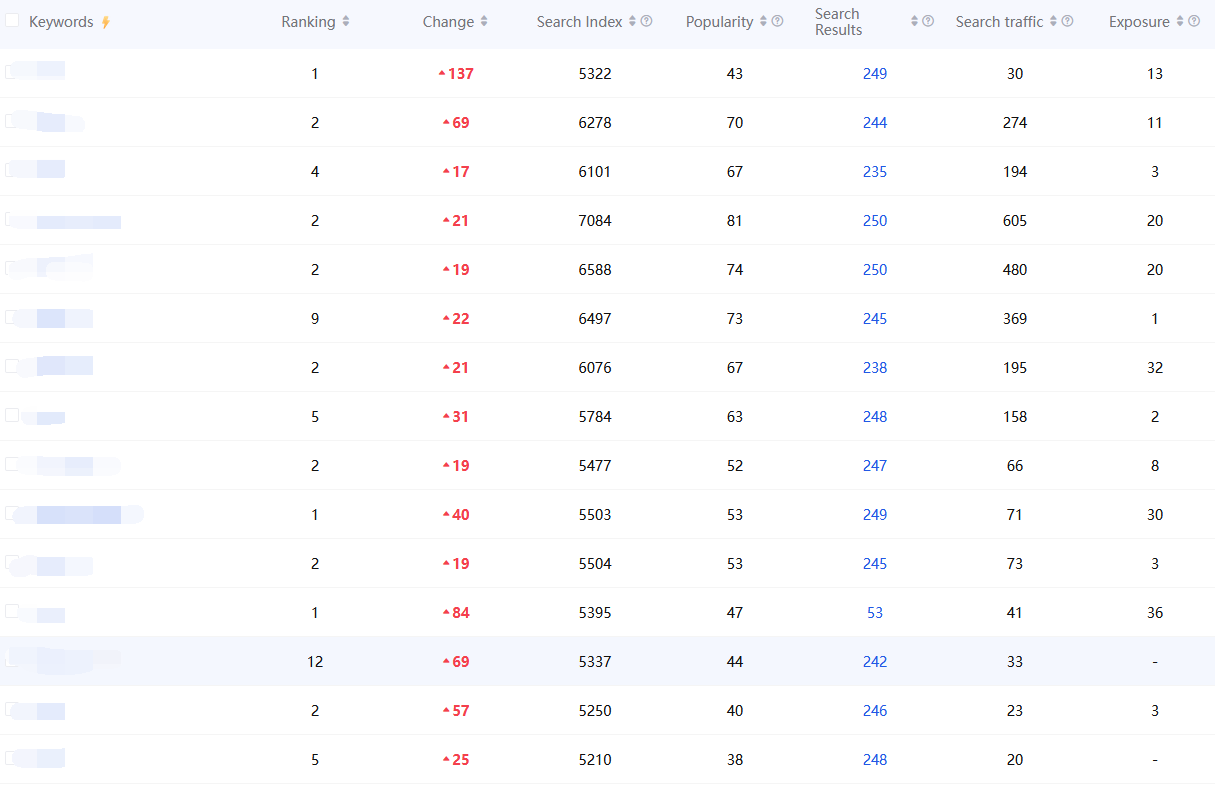
Establish a weekly monitoring mechanism to track changes in keyword rankings using tools. For keywords that consistently rank low and contribute little traffic, promptly replace them with similar high-traffic, low-competition terms. Pay close attention to temporary high-popularity keywords related to holidays and trending events, and promptly incorporate them into your strategy to capture short-term traffic surges. Iterative optimization should follow the principle of “small steps, rapid iterations” to avoid large-scale changes that could cause ranking fluctuations.
If you’ve already completed your keyword layout but your Rankings are slow to improve, or if you’re unsure whether your existing layout aligns with the platform’s algorithm, you can try AppFast’s Keyword Ranking Improvement ServiceLeveraging the platform’s big data and algorithmic matching expertise, we strategically optimize and boost the rankings of core keywords, efficiently seizing search traffic.
Module Two: Cross-Cultural Adaptation – The Key to Converting from “Being Seen” to “Being Downloaded”
Metadata Cultural Adaptation: A Triple Optimization of Value Proposition + Expression Style + Compliance
The cultural adaptation of metadata directly affects users’ acceptance of the product and needs to be implemented from three dimensions:
-
Localization of the value proposition
There are differences in the core needs of users across different markets, necessitating targeted adjustments to the value proposition of metadata. In European and American markets, utility apps emphasize efficiency and privacy protection, while in Southeast Asian markets, they highlight being free and easy to use. In Japanese and Korean markets, social apps focus on emotional connection and community atmosphere, whereas in European and American markets, they emphasize diversity and personalization.
-
Adapted expression style
The European and American markets favor direct and concise messaging that gets straight to the point and communicates core value. The Japanese and Korean markets lean toward gentle, meticulous, and emotionally resonant expressions, emphasizing detailed descriptions that resonate with users. In the Southeast Asian market, copy can be more lively and relatable, with appropriate incorporation of local slang—while ensuring that the slang remains current and aligns with the characteristics of the target user group.
-
Cultural Compliance Avoidance
Conduct thorough research in advance on the target market’s religious beliefs, cultural taboos, and regulatory requirements to avoid using sensitive words or symbols. Metadata must clearly label content that complies with local regulations, such as data protection and age restrictions, to enhance user trust.
Cultural Adaptation of Visual Assets: Optimization Across Three Dimensions—Color + Elements + Scenarios
Visual assets are the first point of contact users have with the app, and their cultural adaptation directly impacts download conversion rates. Optimization must be carried out across three dimensions:
-
Color adaptation
There are significant differences in emotional perceptions of color across different markets, so the primary color scheme must be adjusted to align with local culture. By researching the color choices of leading competitors in the target market and examining the symbolic meanings of colors in the local culture, you can determine the primary color palette for your visual assets and avoid using colors with negative connotations.
-
Element adaptation
Symbols and patterns in visual assets must align with the target market’s perceptions, avoiding elements that local users are unfamiliar with or that evoke negative associations. Icon design should adhere to the principle of simplicity and clarity, prioritizing function-related, intuitive symbols to ensure that users can instantly understand the product’s purpose at a glance.
-
Scenes and characters are well-matched.
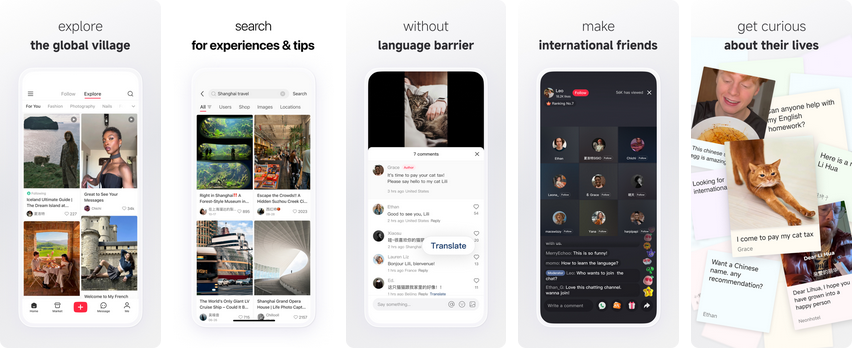
Screenshots and promotional videos must showcase real-life usage scenarios of users in the target market to enhance users’ sense of immersion. The skin tones and attire of the characters should align with the characteristics of the target market population, reflecting diversity and localization to avoid user resistance caused by mismatched character portrayals.
In addition, the copy in the screenshot must be in the target market’s language, with a font size that is clear and easy to read, highlighting the core selling points while avoiding excessive text clutter.
User Reviews and Reputation Management: Localization-Based Responses + Compliance-Guidance Techniques
User Reviews serve as “real references” for users in the target market, and their localized management can significantly enhance trust. The key execution points are as follows:
-
Localization Reply Techniques
Respond to user Reviews in the language of the target market in a timely manner, with a response time not exceeding 24 hours. When responding to negative Ratings, adopt a sincere attitude: apologize first, then outline specific solutions and timelines for improvement. When responding to positive Ratings, express gratitude and reinforce the product’s core value to enhance user goodwill. Avoid using generic templates in your responses; tailor your messaging to the specific content of each Review.
-
Compliance Reputation Guidance Techniques
Strictly comply with app store rules and prohibit any practices that induce Reviews, such as “cashback for positive Ratings,” “unlock features through Reviews,” or similar tactics. Instead, you can use in-app pop-ups to gently prompt users to leave Ratings, or, in conjunction with product updates, invite users to share their experiences after trying out new features. If negative Ratings become concentrated, prioritize optimizing product features rather than simply deleting Reviews.
Common Misconceptions and Avoidance Strategies for Localized ASO
-
Myth 1: Direct Translation of Keywords
Avoidance method: Abandon the “translate first, then search” approach and instead adopt the strategy of “first research target market search terms, then match them to product features.” Validate the effectiveness of your keywords using local tools and app store search results.
-
Myth 2: Keyword Stuffing
Avoidance method: Strictly control the density of keywords in titles and metadata, adhere to the principle of “natural integration,” refer to platform rules and the layout strategies of leading competitors, and avoid platform penalties caused by keyword stuffing.
-
Myth 3: Visual assets are universally applicable worldwide.
Avoidance method: Design visual assets separately for each core target market, ensuring at least localization adjustments to colors and elements. After validating the effectiveness of the assets through small-scale Tests, roll them out across the board.
-
Myth 4: Ignoring Differences in App Store Rules
Avoidance method: Establish a platform rule monitoring mechanism to promptly track rule updates from iOS and Google Play, ensuring that localization optimization strategies comply with the latest requirements and avoiding app removal due to violations.
-
Myth 5: Once optimized in one go, no further iterations are needed.
Avoidance method: Treat localized ASO as a long-term project, establish a mechanism for weekly monitoring and monthly iterations, and continuously optimize strategies based on keyword rankings, conversion data, and market changes.
If you’re unsure whether your app’s metadata has cultural adaptation vulnerabilities or whether your keyword layout is optimal, you can apply for AppFast’s free metadata diagnostic service. A dedicated ASO team will systematically identify issues from the three dimensions of language, culture, and compliance, and provide targeted optimization recommendations.

Summary
The core logic of ASO localization lies in leveraging multilingual keyword optimization to open up traffic channels, enabling the app to precisely reach users in the target market. By adapting to different cultures, the app strengthens its conversion capabilities, making the user journey from “seeing” to “downloading” smoother and more seamless. Localization is not a one-time effort; it is a long-term undertaking that requires continuous iteration based on market feedback, keyword popularity, and cultural trends. Only by truly integrating the app into the target market can it gain a firm foothold in fierce competition and continuously capture market share and traffic.

Навигация
Introduction: ASO Localization – The Core Key to Breaking the Traffic Impasse
Basic Understanding: The Core Logic of ASO Localization
Module One: Multilingual Keyword Optimization — A Standardized Process for Precisely Seizing Traffic Entry Points
Module Two: Cross-Cultural Adaptation – The Key to Converting from “Being Seen” to “Being Downloaded”
Common Misconceptions and Avoidance Strategies for Localized ASO
Summary
Бесплатные консультации специалистов по ASO
Вы впервые занимаетесь ASO или не знаете, как выполнить целевую оптимизацию вашего приложения?
Мы предлагаем индивидуальные услуги, предоставляемые специалистами по маркетингу приложений.
Связанные рекомендации



Copyright © 2018 - 2021 AppFast Company, LLC. All Rights Reserved. The AppFast word mark is a
registered trademark of AppFast Company, LLC in the US and other countries.